A New Way to See Kyoto's Political History
Kyoto has two sites that, between them, cover nearly 700 years of Japanese political history, and until now, most visitors have had to choose one or the other. We're launching a new private tour that connects both in a single half-day itinerary: Nijo Castle, seat of the Tokugawa shogunate, and the Kyoto Imperial Palace, home of the emperor for over a thousand years.
This post covers what the tour includes, why we built it this way, and what to expect if you book.
Why Pair These Two Sites
Nijo Castle and the Kyoto Imperial Palace represent opposite ends of the same story. Nijo Castle was built in 1603 by Tokugawa Ieyasu, the first Tokugawa shogun, as a Kyoto residence that also functioned as a deliberate statement of military authority over the imperial court. The Imperial Palace, by contrast, was where the emperor actually lived, largely without political power, for the length of the Edo period.
That relationship, a military government asserting itself alongside a ceremonial imperial court, shaped Japanese politics for over two and a half centuries, and it ended at these same two locations. In 1867, the 15th and final shogun, Tokugawa Yoshinobu, returned political authority to Emperor Meiji, an event that took place inside Nijo Castle itself.
Visiting both sites back to back makes that history legible in a way that visiting either one alone doesn't.
What You'll See at Nijo Castle
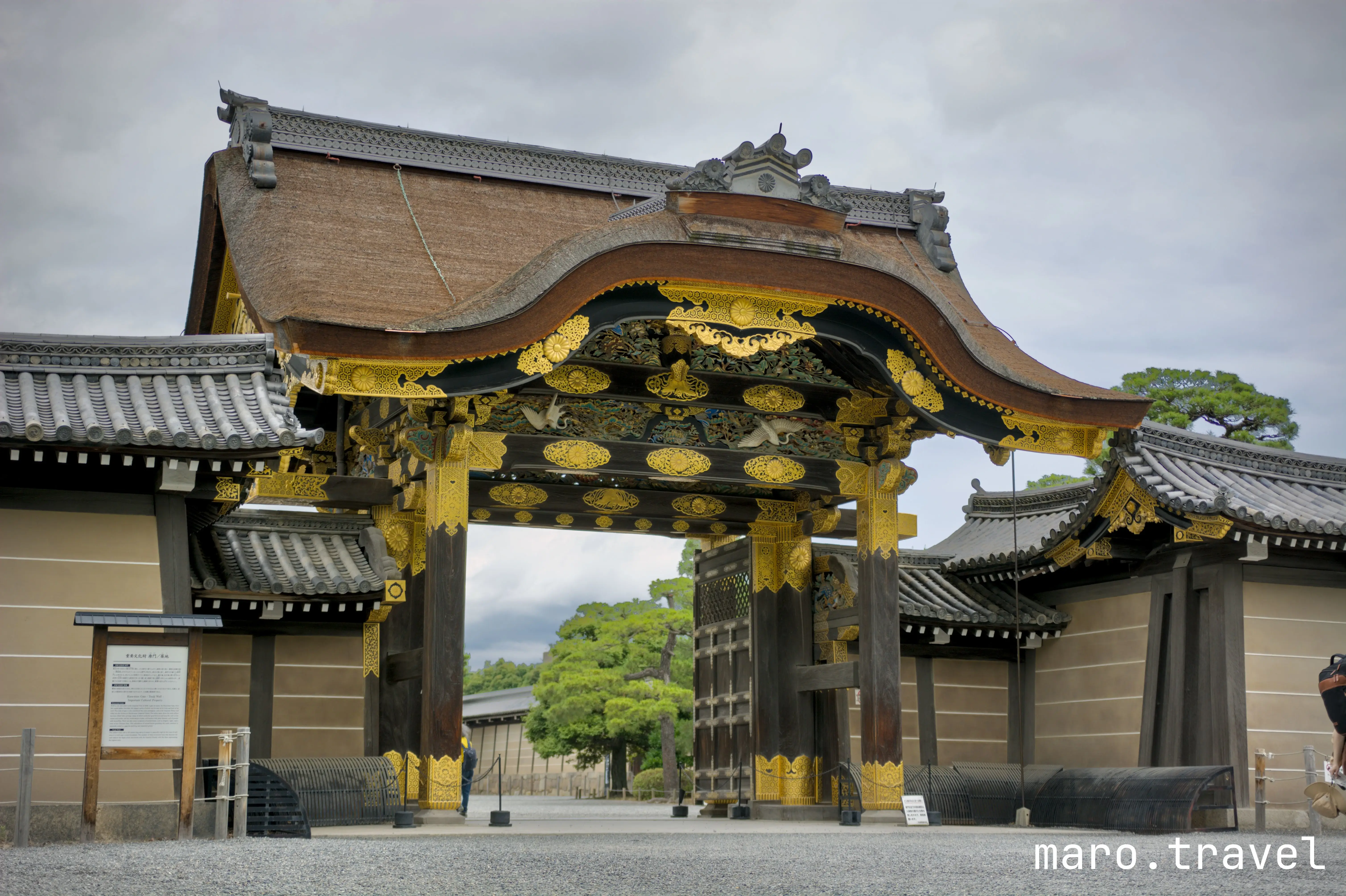
The Karamon Gate, the ornately decorated entrance to Ninomaru Palace, featuring gilded carvings of cranes, chrysanthemums, and other motifs associated with the Tokugawa shogunate.
The tour begins at Nijo Castle's main grounds, which include the Karamon Gate, a National Treasure and one of the most heavily decorated gates in Japan, and Ninomaru Palace, the castle's primary residence building. Ninomaru Palace is known for its "nightingale floors," corridors built to chirp underfoot as a security measure against intruders and assassins. The interior halls, painted by artists of the Kano school, are where the Tokugawa shoguns received daimyo and, later, where the transfer of power back to the emperor was formally announced.
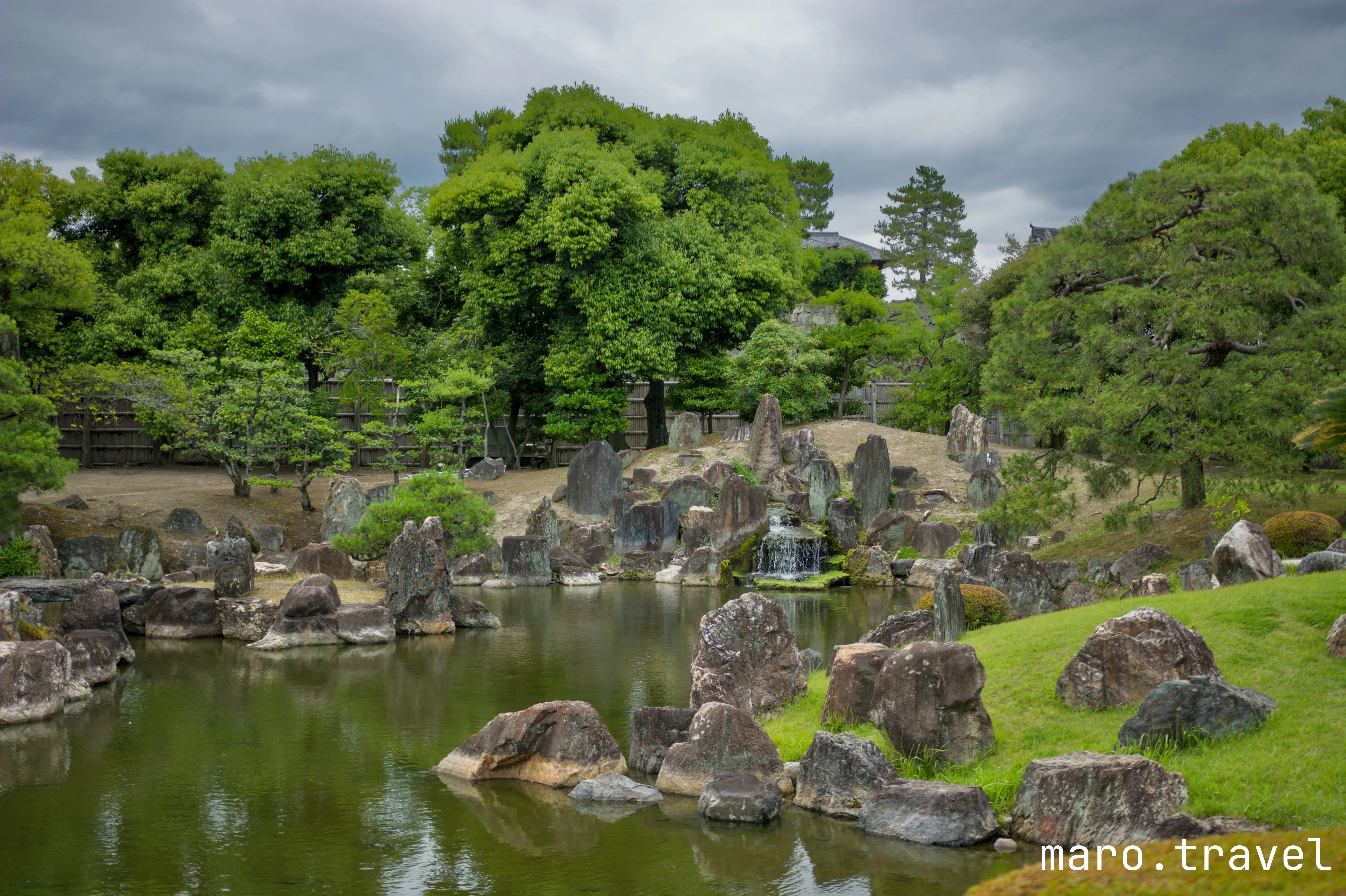
The Ninomaru Garden, a traditional Japanese strolling garden built around a central pond, attributed to garden designer Kobori Enshu.
The Ninomaru Garden, just beside the palace, is a classic Edo-period strolling garden with a central pond and carefully arranged stones. It's less visited than the palace interior, which makes it a good place to slow down partway through the stop.
What You'll See at the Imperial Palace
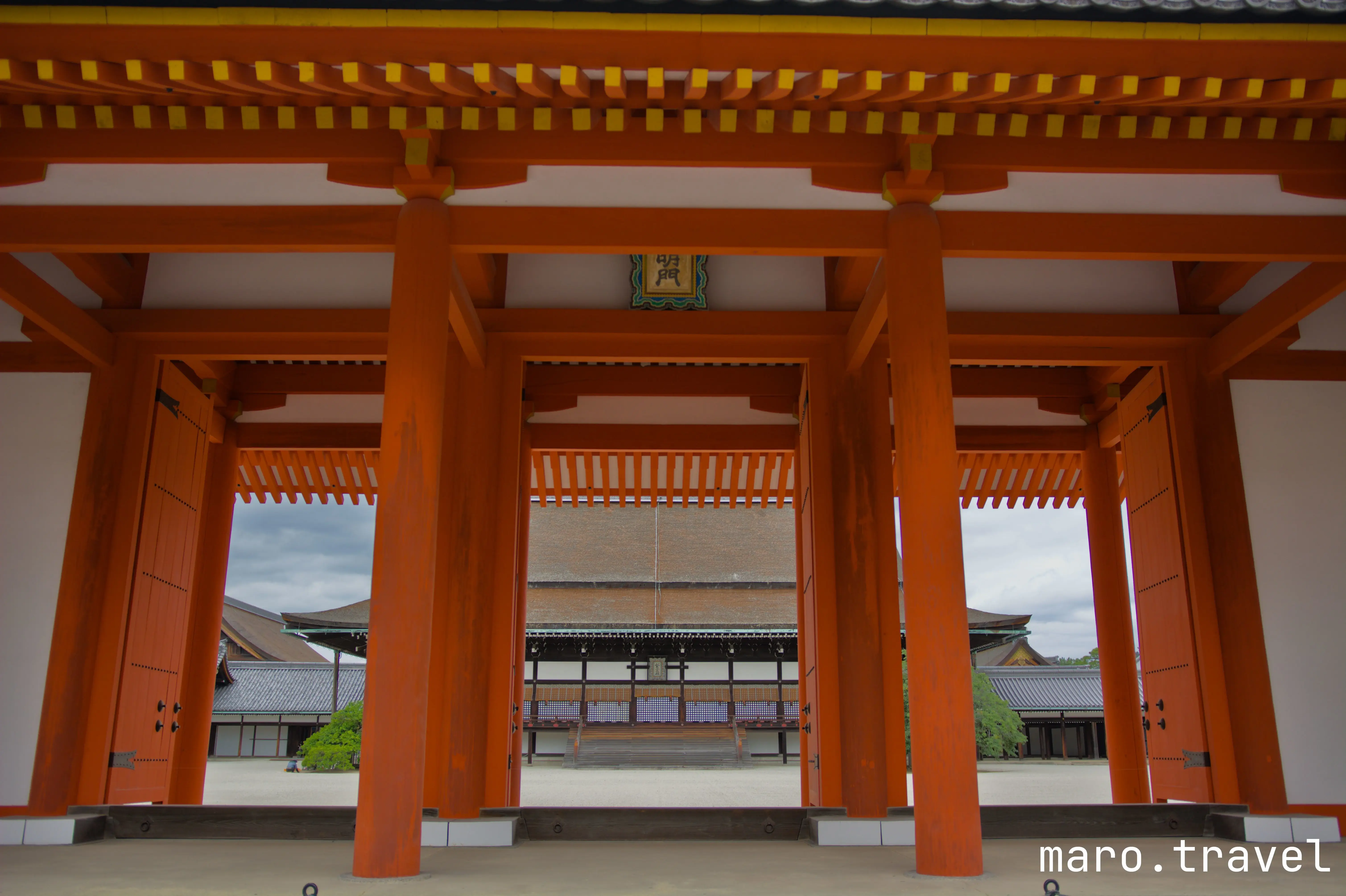
Looking through the gates of the Imperial Palace grounds toward the Shishinden, the palace's main ceremonial hall.
After a short subway ride, the tour continues at the Kyoto Imperial Palace, the former residence of Japan's imperial family until 1868, when the capital moved to Tokyo. Unlike Nijo Castle's dense ornamentation, the Imperial Palace's architecture is deliberately restrained, a visual contrast that says a lot about the different kinds of authority each site represented.
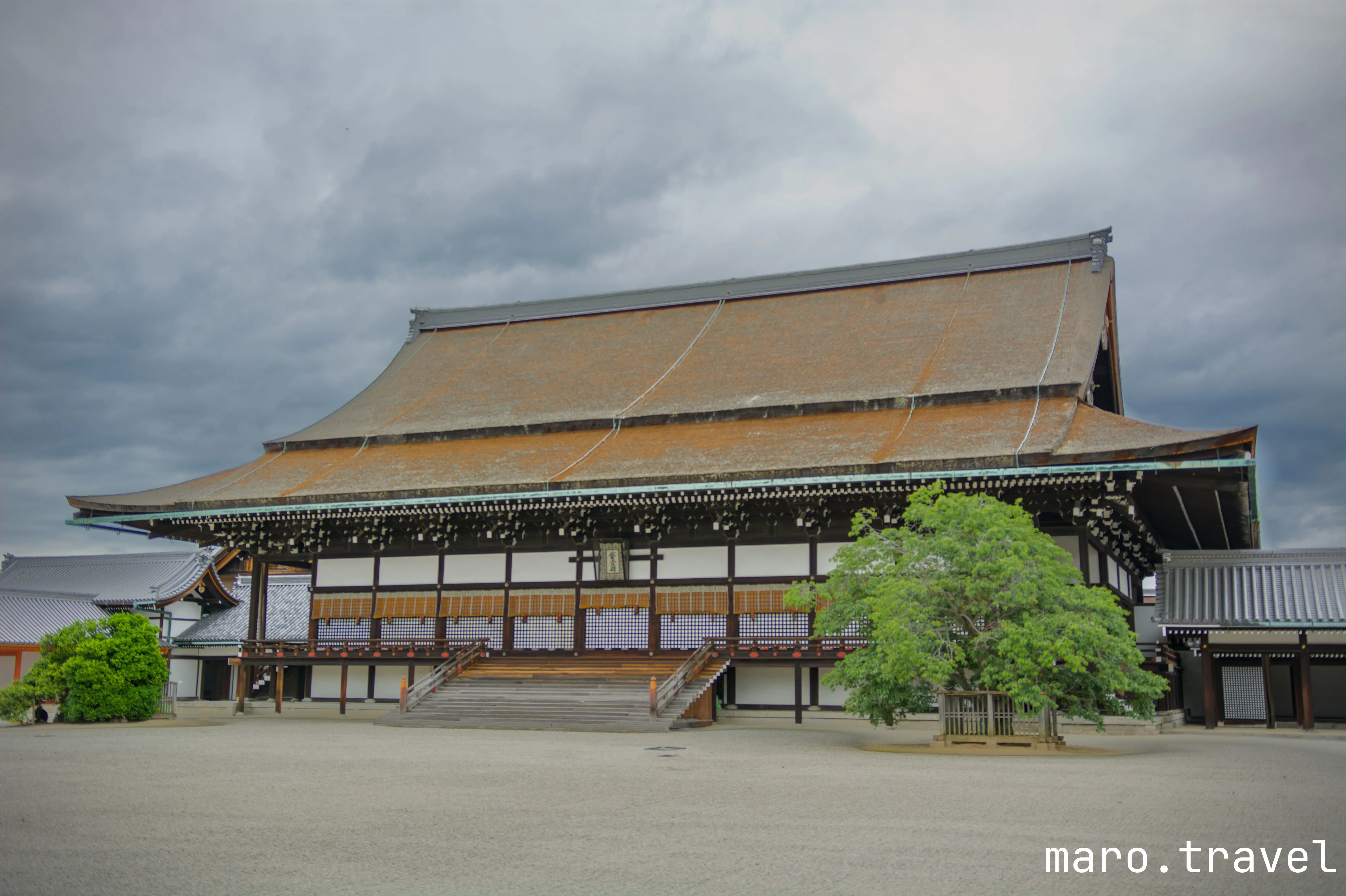
The Shishinden, the most important ceremonial building on the palace grounds, historically used for enthronement ceremonies.
The Shishinden is the palace's most significant structure, used historically for enthronement ceremonies, including that of the current Reiwa-era emperor's predecessors. The surrounding grounds are large, quiet, and, unlike Nijo Castle, free to enter, which is one of the reasons we end the tour here rather than starting.
How the Tour Works
This is a private tour, meaning your group is the only group with the guide. There's no joining a larger group of strangers. It runs about 2.5 hours, starting at Nijo Castle and ending at the Imperial Palace, with a short subway ride between the two.
Meeting point: Nijōjō-mae Station, Exit 2
End point: Near Marutamachi Station
Duration: Approximately 2.5 hours
Group size: Up to 6 people
Starting times: 9:00 AM or 1:00 PM
Entrance fees for Nijo Castle (¥1,300 for castle grounds and Ninomaru Palace) and subway fare (¥220) are not included and are paid directly by guests. The Imperial Palace itself is free to enter.
Booking
The tour is now open for booking, with two daily time slots to choose from. If you're planning a Kyoto itinerary and want the history of the city's imperial and military past explained on site rather than pieced together from plaques, this is what the tour is built for. You can book below.


